
Characteristics, advantages, and differences between gear reducers and other reducers
Release Time:
2024-12-14
In modern industry, reducers are widely used as important transmission equipment in various mechanical devices. Among them, gear reducers stand out among many reducers due to their unique characteristics and advantages. This article will provide a detailed introduction to the characteristics and advantages of gear reducers, and compare them with other types of reducers, in order to help readers better understand the application and value of gear reducers.
In modern industry, reducers are widely used as important transmission equipment in various mechanical devices. Among them, gear reducers stand out among many reducers due to their unique characteristics and advantages. This article will provide a detailed introduction to the characteristics and advantages of gear reducers, and compare them with other types of reducers, in order to help readers better understand the application and value of gear reducers.
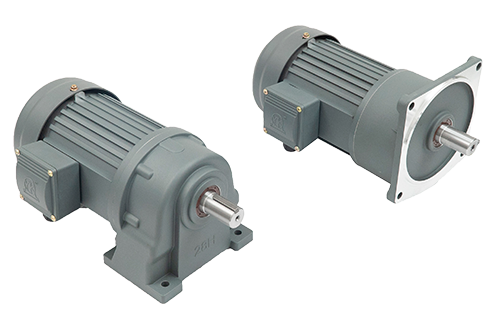
1、 Characteristics of gear reducers
Gear reducer is a multi-stage gear transmission mechanism, which uses gears of different specifications to drive the engine and reduce the engine speed. Its characteristics are mainly reflected in the following aspects:
Compact structure: The gear reducer achieves the characteristics of compact structure, small volume, and light weight by optimizing the gear layout and housing design. This makes gear reducers highly valuable in applications with limited space.
High transmission efficiency: The gear reducer adopts high-precision gears and achieves high transmission efficiency by optimizing gear meshing and lubrication methods. This helps to reduce energy loss and improve the overall performance of the equipment.
Strong load-bearing capacity: The gears of the gear reducer are made of high-strength materials, which have high load-bearing capacity and fatigue resistance. This enables the gear reducer to withstand larger loads and adapt to higher working intensities.
High transmission accuracy: The gear reducer achieves high-precision gear manufacturing through advanced manufacturing processes such as CNC gear grinding. This helps to achieve accurate speed conversion and position control, improving the automation level of the equipment.
Smooth operation: The gears of the gear reducer mesh well, operate smoothly, and have low noise. This helps to reduce equipment vibration and noise pollution, and improve equipment reliability and stability.
2、 Advantages of gear reducers
Gear reducers, with their unique characteristics, have the following advantages in industrial production:
Strong adaptability: Gear reducers can be applied to various transmission systems to meet the needs of different speeds, torques, and powers. This makes gear reducers have a wide range of application prospects in various mechanical equipment.
Energy saving and environmental protection: Gear reducers have high transmission efficiency, reducing energy loss. Meanwhile, its compact structure and low noise also contribute to reducing environmental pollution.
Easy maintenance: The structure of the gear reducer is simple, easy to disassemble, inspect and repair. This helps to reduce the maintenance cost of the equipment, improve its reliability and service life.
High cost-effectiveness: Gear reducers have a high cost-effectiveness in terms of performance, reliability, and price. This makes gear reducers the preferred transmission equipment for many enterprises.
Gear reducers have wide application value in industrial production due to their compact structure, high transmission efficiency, strong load-bearing capacity, high transmission accuracy, and smooth operation. Compared with other types of reducers, gear reducers have unique advantages in performance, reliability, and price. Therefore, when choosing transmission equipment, enterprises should fully consider the characteristics and advantages of gear reducers to meet their own needs and reduce maintenance costs.
Related News