
Servo motor fault analysis, after reading it, you are also an expert
Release Time:
2024-11-30
Three phase AC servo motors are widely used, but after long-term operation, various faults may occur. Timely identification of the cause of faults and corresponding handling is an important task to prevent the expansion of faults and ensure the normal operation of equipment.
Three phase AC servo motors are widely used, but after long-term operation, various faults may occur. Timely identification of the cause of faults and corresponding handling is an important task to prevent the expansion of faults and ensure the normal operation of equipment.
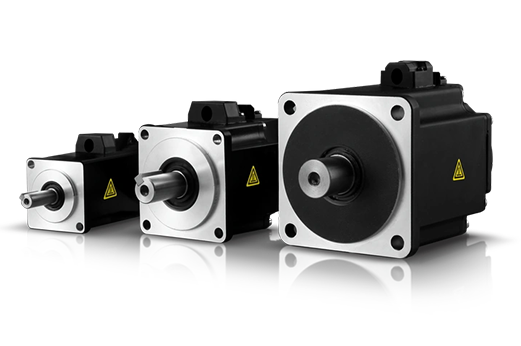
Motor encoder alarm
1. Reason for malfunction
① Wiring error;
② Electromagnetic interference;
③ Hardware damage to the encoder caused by mechanical vibration;
④ Pollution caused by on-site environment;
2. Troubleshooting
① Check the wiring and eliminate errors;
② Check if the shielding is in place, check if the wiring is reasonable and solve the problem, and if necessary, add filters to improve it;
③ Check the mechanical structure and make improvements;
④ Check whether the inside of the encoder is contaminated or corroded (dust, oil stains, etc.), and strengthen protection;
3. Installation and wiring standards
① Try to use original cables as much as possible;
② Separate cables to keep them as far away as possible from contaminated wiring, especially high pollution wiring;
③ Always use internal power sources as much as possible. If using a switch mode power supply, a filter should be used to ensure that the power supply reaches a clean level;
④ Always ground the public terminal;
⑤ Insulate the encoder casing from the machine structure and connect it to the cable shielding layer;
⑥ If it is not possible to insulate the encoder, the cable shielding layer can be connected to the grounding (or dedicated terminal) on the encoder housing and driver frame.
Motor shaft breakage
1. Reason for malfunction
① Unreasonable mechanical design leads to excessive radial load force;
② Load end jamming or severe instantaneous overload;
③ The motor and reducer are not concentric during assembly.
2. Troubleshooting
① Verify the maximum radial load force that the motor sample can withstand and improve the mechanical design;
② Check the operation of the load side, confirm the actual process requirements, and make improvements;
③ Check whether the load runs stably, whether there is vibration, and improve the mechanical assembly accuracy.
Related News