
Preventive techniques for starting faults of three-phase asynchronous motors
Release Time:
2024-11-30
The speed of the rotor of a three-phase asynchronous motor is lower than that of the rotating magnetic field. The rotor winding induces electromotive force and current due to relative motion with the magnetic field, and interacts with the magnetic field to generate electromagnetic torque, achieving energy conversion. Compared with single-phase
The speed of the rotor of a three-phase asynchronous motor is lower than that of the rotating magnetic field. The rotor winding induces electromotive force and current due to relative motion with the magnetic field, and interacts with the magnetic field to generate electromagnetic torque, achieving energy conversion. Compared with single-phase
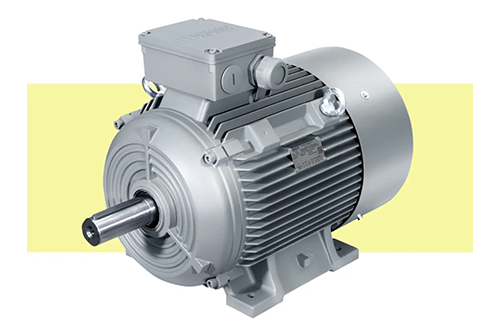 asynchronous motors, three-phase asynchronous motors have better operating performance and can save various materials. According to the different rotor structures, three-phase asynchronous motors can be divided into cage type and wound type. The asynchronous motor with cage rotor has a simple structure, reliable operation, light weight, and low price, and has been widely used. Its main disadvantage is the difficulty in speed regulation. The rotor and stator of a wound three-phase asynchronous motor are also equipped with three-phase windings and connected to external resistors through slip rings and brushes. Adjusting the resistance of the variable resistor can improve the starting performance of the motor and regulate its speed.
Principle of three-phase asynchronous motor
When symmetrical three-phase alternating current is fed into the stator winding, a rotating magnetic field is generated that rotates clockwise along the inner circular space of the stator and rotor at synchronous speed n1. Due to the rotating magnetic field rotating at n1 speed, the rotor conductor is initially stationary, so the rotor conductor will cut the stator rotating magnetic field and generate induced electromotive force (the direction of induced electromotive force is determined by the right-hand rule). Due to the short-circuit ring at both ends of the conductor, under the action of induced electromotive force, an induced current in the rotor conductor will be generated that is basically in the same direction as the induced electromotive force. The current carrying conductor of the rotor is subjected to electromagnetic force in the stator magnetic field (the direction of the force is determined by the left-hand rule). Electromagnetic force generates electromagnetic torque on the rotor shaft, driving the rotor to rotate in the direction of the rotating magnetic field.
Based on the above analysis, the working principle of an electric motor can be summarized as follows: when the three-phase stator windings of the motor (each with a difference of 120 degrees in electrical angle) are supplied with three-phase AC power, a rotating magnetic field is generated, which cuts the rotor winding and induces current in the rotor winding (the rotor winding is a closed path). The current carrying rotor conductor will generate electromagnetic force under the action of the stator rotating magnetic field, thereby forming electromagnetic torque on the motor shaft, driving the motor to rotate, and the direction of motor rotation is the same as that of the rotating magnetic field.
Whether the motor is in static or dynamic state, the direct harm caused by phase loss operation is overheating or even burning out of one or two phases of the motor winding. At the same time, the overcurrent operation of power cables accelerates insulation aging. Especially in static state, phase loss will generate a locked rotor current in the motor winding that is several times the rated current. The speed of winding burnout is faster and more severe than sudden phase loss during operation. So while we carry out daily maintenance and repair of the motor, we must conduct comprehensive inspection and testing of the corresponding MCC functional units of the motor. Especially, it is necessary to carefully check the reliability of load switches, power lines, and static and dynamic contacts. Eliminate phase loss operation.
Related News