
Electric motor is one of the essential equipment in production and
Release Time:
2024-11-25
manufacturing, and various malfunctions are inevitable in actual operation. In order to ensure the normal operation of the motor, in addition to using it according to the operating procedures and paying attention to normal monitoring and maintenance during operation, regular inspections should also be carried out to do a good job in motor maintenance. Below are common motor faults, motor repair methods, and knowledge on motor maintenance.
manufacturing, and various malfunctions are inevitable in actual operation. In order to ensure the normal operation of the motor, in addition to using it according to the operating procedures and paying attention to normal monitoring and maintenance during operation, regular inspections should also be carried out to do a good job in motor maintenance. Below are common motor faults, motor repair methods, and knowledge on motor maintenance.
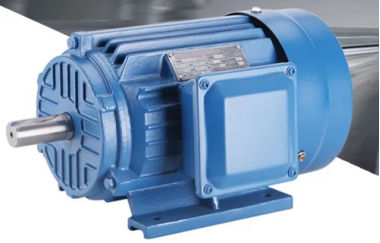
1、 Motor maintenance methods
1. How to repair abnormal heating of the motor
The general method of repair is to replace the motor or perform maintenance and upkeep.
2. The no-load current of the motor is greater than the limit data in the reference table
Indicating that the motor has malfunctioned, possible reasons include:
The internal mechanical friction of the motor is high; Partial short circuit of coil; Demagnetization of magnetic steel; Carbon deposition in the DC motor inverter. The general method of repair and treatment is to replace the motor, replace the carbon brush, and clean the carbon deposits.
3. What is the maximum fault free no-load current limit for various motors
When the rated voltage of the motor is 24V and the rated voltage is 36V:
Side mounted motor 2.2A1.8A;
High speed brushed motor 1.7A1.0A;
Low speed brushed motor 1.0A0.6A;
High speed brushless motor 1.7A0.6A;
Low speed brushless motor 1.0A0.6A.
4. Electric motor temperature rise too high or smoking
This type of malfunction is a manifestation of the motor overheating. There are many reasons for this: external factors of the motor, such as poor power supply quality, excessive load, high ambient temperature, and poor ventilation, etc; There are also reasons related to the electric motor itself.
Common causes and countermeasures of electric motors themselves:
(1) The winding connection method is incorrect, mistakenly connecting the star shape into a triangle or the opposite.
(2) Short circuit or grounding between turns or phases of the stator winding increases the current and copper loss. If the fault is not serious, only re insulation is needed, and if it is serious, the winding should be replaced.
(3) One phase winding of the stator is broken, or one branch of the parallel winding is disconnected, causing three-phase current imbalance and overheating of the winding.
(4) The rotor bar is broken. Welding repair or replacement of copper bar rotors, and replacement of cast aluminum rotors.
(5) The stator and rotor rub against each other. Check whether the bearings are loose and whether the stator and rotor are poorly assembled.
(6) High ambient temperature, excessive dirt on the surface of the motor, or blocked ventilation ducts.
(7) Motor fan malfunction, poor ventilation.
5. Bearing overheating
When the temperature of the rolling bearings of the electric motor exceeds 95 ℃ and the temperature of the sliding bearings exceeds 80 ℃, it is considered that the bearings are overheated. The reasons and countermeasures are as follows:
(1) The bearing should be replaced if it is damaged.
(2) Insufficient or excessive lubricating grease for rolling bearings, or impurities such as iron filings. The capacity of the lubricating grease should not exceed 70% of the capacity of the bearing and bearing cover, and it should be replaced if there are impurities.
(3) The fit between the bearing and the end cap is too tight or too loose. Process the bearing chamber when it is too tight, and insert a steel sleeve into the end cover when it is too loose.
(4) Poor assembly of motor end caps or bearing caps. Flatten the end cap or bearing cap stopper and tighten the screws.
(5) The drive belt is too tight or the coupling is poorly assembled. Adjust the tension of the drive belt and calibrate the coupling.
(6) The lubricating oil for sliding bearings is too low, with impurities or oil rings stuck. It should be oiled, replaced with new oil, repaired or replaced with oil rings.
(7) The bearing clearance is too large or too small.
(8) The motor shaft is bent.
6. Abnormal noise
(1) When the stator and rotor rub against each other, there will be a piercing "click click" sound. Bearings should be inspected and any damaged ones should be replaced. If the bearing is not damaged and it is found that the bearing is running on the inner or outer ring, it can be fitted with a sleeve or the bearing and end cap can be replaced.
(2) The electric motor is running in phase loss, and the roar is particularly loud. Power off and then close to see if it can be restarted normally. If it cannot be started, there may be a phase break. Failure to connect the contacts of switches and contactors can also result in phase loss operation.
(3) When the bearing is severely lacking in oil, a "sizzling" sound can be heard from the bearing chamber. The bearings should be cleaned and new oil should be added.
(4) When the fan blades touch the shell or there are debris, they will make a collision sound. The fan blades should be calibrated and debris around them should be removed.
(5) When the rotor bar breaks, there is a high and low "buzzing" sound, the speed slows down, and the current increases.
(6) The wiring at the beginning and end of the stator winding is incorrect, with a low growl sound and a decrease in speed.
(7) The stator and rotor iron cores are loose.
2、 Motor maintenance strategy
1. The usage environment should be kept dry regularly, the surface of the motor should be kept clean, and the air inlet should not be obstructed by dust, fibers, etc.
2. When the thermal protection of the motor continues to operate, it should be determined whether the fault comes from the motor, overload, or the setting value of the protection device is too low. After eliminating the fault, it can be put into operation.
3. Good lubrication of the motor should be ensured during operation. A typical electric motor should be replenished or replaced after running for about 5000 hours.
When the bearing overheats or the lubrication deteriorates during operation, the hydraulic system should replace the lubricating grease in a timely manner. When replacing the lubricating grease, the old lubricating oil should be removed, and the oil grooves of the bearing and bearing cover should be cleaned with gasoline. Then, ZL-3 lithium grease should be filled into 1/2 (for 2 poles) and 2/3 (for 4, 6, and 8 poles) of the cavity between the inner and outer rings of the bearing.
4. When the service life of the bearing is over, the vibration and noise of the motor operation will significantly increase. When the radial clearance of the bearing reaches the following value, the bearing should be replaced.
5. When disassembling the motor, the rotor can be removed from either the extended or non extended end of the shaft. If it is not necessary to remove the fan, it is more convenient to remove the rotor from the non shaft extension end. When removing the rotor from the stator, care should be taken to prevent damage to the stator winding or insulation.
6. When replacing the winding, it is necessary to record the form, size, number of turns, wire gauge, etc. of the original winding. When these data are lost, they should be requested from the manufacturer. Changing the original design winding arbitrarily often deteriorates one or several performance aspects of the motor, and even renders it unusable.
Related News