
Is the planetary gearbox self-locking
Release Time:
2024-11-22
In short, whether a planetary gearbox is self-locking depends on its internal structure and design. When choosing a planetary gearbox, practical application scenarios and requirements should be fully considered to ensure that performance requirements are met and costs are reduced.
Analysis of whether planetary gearbox is self-locking
Planetary gearbox, as an imCportant mechanical transmission device, has been widely used in industrial automation, robotics technology and other fields. The question of whether planetary gearboxes have self-locking function has attracted much attention in practical applications. This article will briefly introduce the working principle of planetary gearboxes and analyze whether they are self-locking.
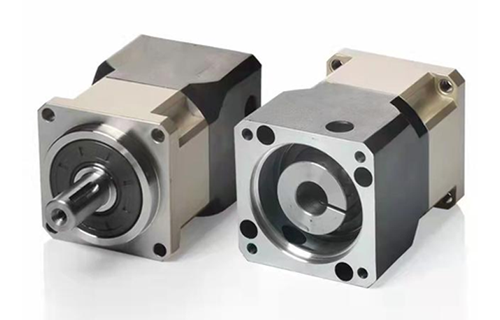
Firstly, let's understand the working principle of planetary gearboxes. The planetary gearbox is mainly composed of three parts: the sun gear, the planetary gear, and the inner ring gear. When the input shaft drives the sun gear to rotate, the planetary gears revolve around the sun gear and transmit power to the output shaft through meshing with the internal gear ring, achieving a deceleration effect. The meshing relationship between the planetary gear, sun gear, and inner ring gear is crucial in this process.
Next, we will explore whether the planetary gearbox is self-locking. Self locking refers to the ability of the gearbox to maintain a fixed position on the output shaft when the input power is stopped, without reversing due to external forces. Whether a planetary gearbox has self-locking function mainly depends on its internal structure and design.
Generally speaking, ordinary planetary gearboxes do not have self-locking function. Because the meshing relationship between its internal gears allows the output shaft to reverse under external force even when the input shaft stops rotating. However, in order to meet the needs of specific application scenarios, some planetary gearboxes may adopt special self-locking structures in their design. For example, a one-way clutch or friction plate is installed between the planetary gear and the inner ring gear to achieve self-locking function. These specially designed planetary gearboxes can maintain a fixed position of the output shaft when the input power is stopped, preventing reverse rotation due to external forces.
It should be noted that although specially designed planetary gearboxes can achieve self-locking function, this will also increase their manufacturing cost and complexity. Therefore, when choosing a planetary gearbox, a balance should be made based on specific application scenarios and requirements. For applications that require self-locking function, a specially designed planetary gearbox can be chosen; For applications that do not require self-locking function, a more economical and simple ordinary planetary gearbox can be chosen.
In short, whether a planetary gearbox is self-locking depends on its internal structure and design. When choosing a planetary gearbox, practical application scenarios and requirements should be fully considered to ensure that performance requirements are met and costs are reduced.
Related News