
How to connect the four wires inside the single-phase motor?
Release Time:
2024-11-19
The connection of a single-phase motor is very simple, just connect the four wires to the phase terminal, ground terminal, switch terminal, and winding terminal of the power supply. However, when connecting the motor, attention should be paid to the power supply voltage, winding wire connection, and grounding wire connection to ensure the safe operation of the motor.
A single-phase motor is a common type of motor characterized by only one phase. The structure of a single-phase motor is relatively simple, usually consisting of only four wires: lead wire, grounding wire, switch wire, and winding wire. Firstly, connect the grounding wire to the grounding terminal of the power supply, then connect the lead wire to the phase terminal of the power supply, and finally connect the switch wire and winding wire to the switch and winding terminals of the motor, respectively.
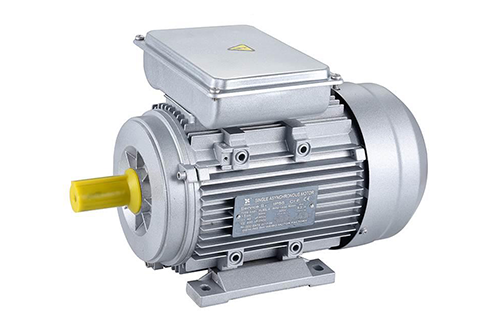
The four wires that come out of a single-phase motor are usually two for the main winding (running winding) and two for the auxiliary winding (starting winding). There are two common situations for internal connections:
The first scenario: capacitor operated motor
Principle: The main winding and auxiliary winding are always powered during the operation of the motor. The capacitor is connected in series in the auxiliary winding circuit, playing a phase shifting role, causing a phase difference in the current of the main and auxiliary windings, thereby generating a rotating magnetic field and driving the motor rotor to rotate.
Connection method:
Usually, the two wires of the main winding are directly connected to the two wires of the power supply (such as a live wire L and a neutral wire N).
Two wires of the secondary winding, one of which is first connected to one end of the capacitor, the other end of the capacitor and the other wire of the secondary winding, and then connected to the two wires of the power supply. It should be noted that the connection between the secondary winding and the main winding must ensure the correct rotation of the motor. If the rotation is incorrect, the two wires of the secondary winding can be swapped and connected to the positions of the capacitor and power supply to change the rotation of the motor.
Second scenario: Capacitive starter motor
Principle: When the motor starts, the secondary winding and capacitor are connected in series and connected to the power supply, generating a rotating magnetic field to help the motor start. When the motor speed reaches about 70% -80% of the rated speed, the secondary winding is cut off from the power supply through a centrifugal switch (inside the motor), and then the motor is maintained solely by the main winding.
Connection method:
The two wires of the main winding are also directly connected to the power supply.
One of the two wires of the secondary winding is connected to one end of the centrifugal switch, the other end of the centrifugal switch is connected to one end of the capacitor, and the other end of the capacitor is connected to the other wire of the secondary winding. These three wires (one wire of the secondary winding, one end of the centrifugal switch and one end of the capacitor connected together, and the other wire of the secondary winding) are collectively considered as the connection part between the secondary winding circuit and the power supply. During the motor start-up process, current flows from the power supply through the secondary winding and capacitor, forming a start-up circuit; When the motor reaches a certain speed, the centrifugal switch opens and the secondary winding is disconnected from the circuit.
If you want to wire the motor, be sure to cut off the power first and carefully check the nameplate and wiring diagram of the motor to ensure correct wiring and avoid motor damage or safety accidents.
When connecting the motor, some precautions need to be taken. Firstly, ensure that the voltage of the power supply is the same as that of the motor. Secondly, ensure that the winding wires of the motor are connected correctly, otherwise it may cause the motor to malfunction. Afterwards, it is necessary to ensure that the grounding wire of the motor is well connected to the grounding terminal of the power supply to ensure the safe operation of the motor.
The connection of a single-phase motor is very simple, just connect the four wires to the phase terminal, ground terminal, switch terminal, and winding terminal of the power supply. However, when connecting the motor, attention should be paid to the power supply voltage, winding wire connection, and grounding wire connection to ensure the safe operation of the motor.
Related News