
The difference between ordinary motors and regular motors
Release Time:
2024-09-07
Widely used in applications that require speed regulation, such as fans, water pumps, compressors, CNC machine tools, robots, etc. In these situations, variable frequency motors can adjust their speed according to actual needs, achieving the goals of energy conservation, improving production efficiency, and enhancing product quality.
With the rapid development of power electronics technology and new semiconductor devices, AC speed regulation technology continues to improve and enhance. Gradually maturing frequency converters have been widely used in AC motors due to their excellent output waveforms and superior cost performance ratio. Many household appliances have adopted AC variable frequency speed regulation motors for their motors, and have achieved significant results.
So, what is the difference between a variable frequency motor and a regular motor?
Let's delve deeper together below.
working principle
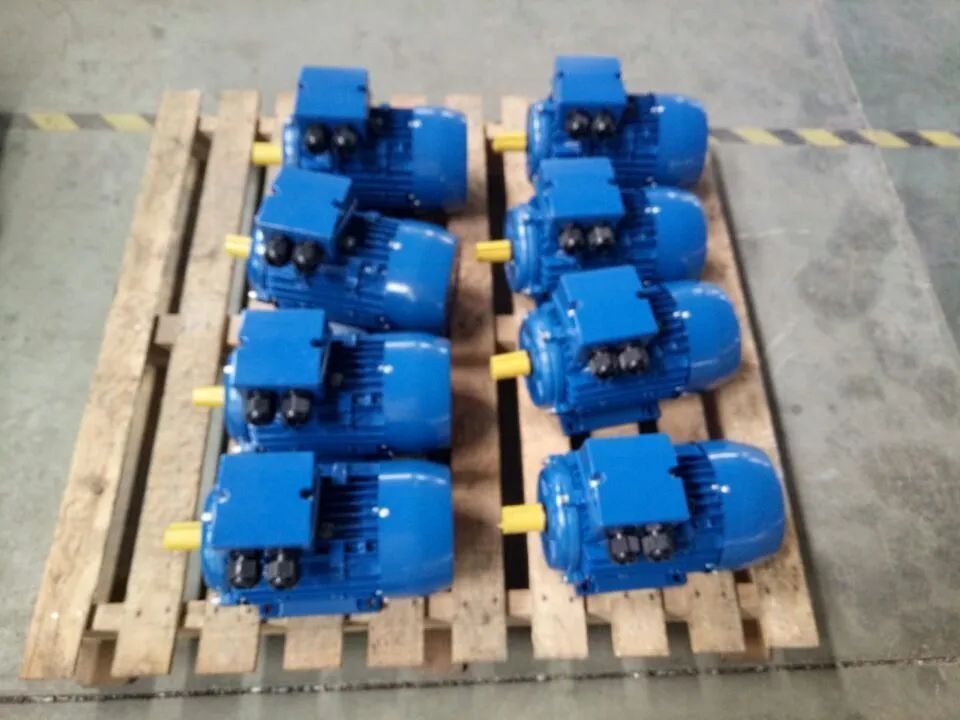
Ordinary motor
Ordinary motors are designed according to a fixed power frequency (such as 50Hz or 60Hz), and their speed is mainly determined by the number of poles of the motor and the power frequency, with a relatively fixed speed.
When the load changes, the speed of the motor remains basically unchanged, and the output torque is adjusted by changing the input current to adapt to the load changes.
Variable frequency motor
Variable frequency motors can operate at different frequencies, and by changing the frequency and voltage of the power supply through the frequency converter, the motor speed can be adjusted.
The frequency converter outputs power of different frequencies and voltages according to actual needs, enabling the motor to operate within a wide speed range and meet the requirements of different working conditions.
Ordinary motor
The structure of a regular motor is relatively simple, mainly composed of components such as stator, rotor, bearings, and end caps.
The design of stator winding is usually optimized according to a fixed frequency, and problems such as heating and efficiency reduction may occur during high or low frequency operation.
Variable frequency motor
The variable frequency motor has been specially designed in structure to meet the requirements of variable frequency speed regulation.
Better insulation performance: Using special insulation materials and insulation structures, it can withstand higher voltage changes and high-frequency pulses, preventing insulation breakdown of the motor during variable frequency operation.
Enhanced heat dissipation performance: Usually equipped with independent heat dissipation fans or adopting more efficient heat dissipation structures to ensure that the motor can effectively dissipate heat at different speeds and prevent overheating damage.
Higher mechanical strength: The rotor and shaft components have been reinforced to withstand the mechanical stress caused by high-speed rotation and frequent acceleration and deceleration.
Speed range
Ordinary motor: The speed range is relatively narrow and can only be adjusted within a small range near the rated speed.
Variable frequency motor: With a wide speed range, it can achieve stepless speed regulation from a few revolutions per minute to several thousand revolutions per minute.
Startup performance
Ordinary motor: When started directly, the starting current is relatively high, which may cause impact on the power grid and other equipment.
Variable frequency motor: It can achieve soft start through a frequency converter, with low starting current and minimal impact on the power grid and other equipment.
Efficiency and power factor
Ordinary motor: When operating at rated frequency, the efficiency and power factor are relatively high, but when operating away from rated frequency, the efficiency and power factor will decrease.
Variable frequency motor: It can maintain high efficiency and power factor over a wide frequency range, resulting in better energy-saving effects.
Noise and vibration
Ordinary motor: When operating at a fixed frequency, the noise and vibration are relatively small, but during variable frequency operation, noise and vibration may increase due to electromagnetic harmonics and other reasons.
Variable frequency motor: Specially designed to effectively reduce noise and vibration during variable frequency operation, improving smooth operation.
Application scenarios
Ordinary motor
Suitable for situations where the speed requirements are relatively fixed and the load changes are small, such as general industrial production equipment, household appliances, etc.
Variable frequency motor
Widely used in applications that require speed regulation, such as fans, water pumps, compressors, CNC machine tools, robots, etc. In these situations, variable frequency motors can adjust their speed according to actual needs, achieving the goals of energy conservation, improving production efficiency, and enhancing product quality.
Related News