
How to optimize the transmission efficiency of the gear of the reduction motor?
Release Time:
2024-11-12
Modulus is a fundamental parameter of gears that determines their size and load-bearing capacity. Appropriately increasing the modulus can improve the strength of gears, but excessive modulus may lead to oversized gears and increased weight. On the premise of meeting the strength requirements, an appropriate modulus should be selected. For example, for small reduction motors, if the transmitted power is small, a smaller module, such as 1-2mm, can be selected to reduce the size and moment of inertia of the gears.
Modulus is a fundamental parameter of gears that determines their size and load-bearing capacity. Appropriately increasing the modulus can improve the strength of gears, but excessive modulus may lead to oversized gears and increased weight. On the premise of meeting the strength requirements, an appropriate modulus should be selected. For example, for small reduction motors, if the transmitted power is small, a smaller module, such as 1-2mm, can be selected to reduce the size and moment of inertia of the gears.
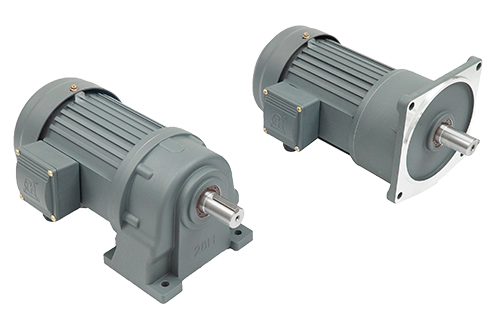
Optimizing the transmission efficiency of gears involves multiple aspects, and the following are some key optimization strategies:
Material selection:
Choose materials with good wear resistance and high strength to reduce tooth surface wear and extend the service life of gears.
Use alloy steel or surface hardening treatment to improve the hardness and wear resistance of the tooth surface.
2. Tooth surface treatment:
Heat treatment of gears, such as carburizing, nitriding, or quenching, to improve the hardness and wear resistance of the tooth surface.
Adopting precision machining methods such as grinding or shaving teeth to achieve higher tooth surface accuracy and smoother surfaces, reducing friction.
3. Geometric design optimization:
Optimize the basic parameters of gear teeth, module, pressure angle, etc. to reduce tooth contact stress.
Adopting shaping techniques such as tooth profile shaping and tooth profile shaping to improve the contact conditions of the tooth surface, reduce meshing impact and noise.
Design reasonable tooth tips and root fillets to reduce stress concentration.
4. Lubrication system design:
Choose appropriate lubricants, such as lubricating oil or grease, to reduce friction between tooth surfaces.
Design an effective lubrication system to ensure that gears receive sufficient lubrication during meshing.
Adopting different lubrication methods such as oil pool lubrication, oil spray lubrication, or oil air lubrication to adapt to different working conditions.
5. Mesh optimization:
Ensure the meshing accuracy of gears, including pitch error, profile error, etc., to improve meshing quality.
Optimize the installation position of the gear to ensure the accuracy of the parallelism and center distance of the gear shaft.
6. Dynamics analysis:
Simulate the gear system using dynamic analysis software, analyze the dynamic behavior of gear meshing, and identify and reduce vibration sources.
By adjusting the parameters or structure of gears, the resonance between the natural frequency and excitation frequency of the system can be reduced.
7. Load distribution:
In a multi gear system, optimizing the arrangement and load distribution of gears can reduce the load on individual gears and improve the overall transmission efficiency of the system.
8. Maintenance and monitoring:
Regular maintenance of the gear system, including replacement of lubricating oil, cleaning and inspection of gears.
Using state monitoring techniques such as vibration analysis, oil analysis, etc., to monitor the operation status of gears in real time, identify problems in a timely manner, and make adjustments.
Through the above methods, the transmission efficiency of gears can be significantly improved, energy loss can be reduced, the service life of gears can be extended, and the performance of the entire transmission system can be improved.
Related News