
The influence of motor bearing wear on reducer
Release Time:
2024-11-11
Bearing wear not only causes vibration in the gearbox, but also affects its transmission efficiency. When the bearing wears out, the motion trajectory of the rotating parts will deviate, causing energy loss. This energy loss not only reduces the efficiency of the equipment, but may also cause overload of other components, leading to more serious malfunctions.
Bearing wear not only causes vibration in the gearbox, but also affects its transmission efficiency. When the bearing wears out, the motion trajectory of the rotating parts will deviate, causing energy loss. This energy loss not only reduces the efficiency of the equipment, but may also cause overload of other components, leading to more serious malfunctions.
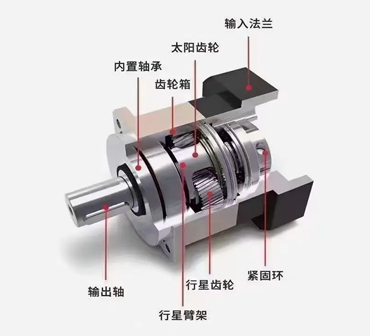
In addition, bearing wear can lead to an increase in heat, which in turn affects the overall temperature of the gearbox. If the temperature is too high, it may cause a decrease in the performance of the lubricating oil and exacerbate wear cycles. Therefore, timely monitoring of the status and temperature changes of the bearings is crucial for extending the service life of the gearbox.
After bearing wear, its accuracy decreases. In an ideal state, the motor rotor can rotate at a stable speed, but worn bearings can cause uneven rotational resistance of the rotor. For example, when the gap between the inner and outer rings of a bearing increases due to wear, the rotor will experience radial runout during rotation. This is like installing a car tire on a loose wheel hub, causing the wheel to shake when it rotates, resulting in fluctuations in the motor speed and inability to stabilize at the set speed value.
For equipment that requires high-precision rotational speed, such as conveyor belt motors in automated production lines, bearing wear can seriously affect the rhythm of product transportation and reduce production efficiency.
Torque transmission is affected
Bearings are key components that connect the motor rotor and load, and they need to effectively transmit torque. Under normal circumstances, the torque generated by the motor can be smoothly transmitted to the load end through the bearings, driving the load to operate normally. However, the fit between the raceway and rolling elements of the worn bearing deteriorates. For example, after the wear of cylindrical roller bearings, there will be relative sliding between the rollers and the raceway, which will result in energy loss during the torque transmission process.
For some equipment that requires a large starting torque, such as the deceleration motor of a crane, worn bearings may not be able to smoothly transmit sufficient starting torque, resulting in difficulty or even inability to start the equipment.
Related News