
The principle and common fault maintenance of single-phase motor
Release Time:
2024-11-08
A single-phase motor is an AC motor primarily composed of a stator and a rotor, designed to be powered solely by a single-phase AC power source. Single phase motors are very common in household appliances and industrial applications, such as in washing machines, air conditioners, pumps, fans, and various other devices.
A single-phase motor is an AC motor primarily composed of a stator and a rotor, designed to be powered solely by a single-phase AC power source. Single phase motors are very common in household appliances and industrial applications, such as in washing machines, air conditioners, pumps, fans, and various other devices.
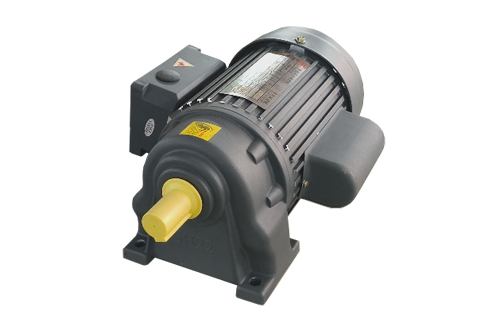
There are several different types of single-phase motors, including:
1. Phase separated motor: This type of motor uses capacitors to separate phases, generating two currents with a phase difference of nearly 90 degrees in the stator to form a rotating magnetic field.
2. Shielded pole motor: also known as a series excited motor, it uses an additional set of stator windings (shielded pole windings) to provide additional magnetic field, thereby providing greater torque at startup.
3. Series excited motor: In this type of motor, the magnetic fields of the rotor and stator are connected in series, which means they share the same current path.
4. Permanent magnet motor: This type of motor uses permanent magnets to generate a magnetic field, which is usually more efficient but also more expensive.
5. Stepper motor: A stepper motor is a special type of single-phase motor that can accurately control the position of the rotor and is commonly used in precision positioning systems.
Single phase motors are highly suitable for applications that require low power and simple control, but they are not suitable for large industrial applications that require high starting torque and high efficiency, where three-phase motors are typically chosen.
Single phase motors may encounter various faults during use. Here are some common faults and their maintenance methods:
1. Difficulty starting: Check if the power supply is normal, if the motor rotor is stuck or if the bearings are worn. At the same time, check if the capacitor is functioning properly, as it is an important component for starting single-phase motors.
2. High noise: It may be caused by unbalanced motor rotors or worn bearings. It is necessary to check whether the motor rotor is balanced and repair or replace worn bearings.
3. Unstable speed: It may be caused by damaged capacitors or rotor imbalance. Check if the capacitor is functioning properly and repair or replace it, while also checking if the motor rotor is balanced.
4. Power line problems: Check whether the power line is damaged or has poor contact, and replace or repair it in a timely manner.
5. Capacitor problem: Damage or insufficient capacity of capacitors can cause difficulty or inability to start single-phase motors. Check if the capacitor is functioning properly. If any damage or insufficient capacity is found, it should be replaced promptly.
6. Rotor and bearing issues: If the rotor is unbalanced or the bearings are worn, it can cause high noise or unstable speed in single-phase motors. Check whether the rotor and bearings are normal. If any abnormalities are found, they should be repaired or replaced in a timely manner.
7. When powered on, the motor does not rotate and emits a "buzzing" sound: this is usually caused by single-phase faults or locked rotor faults. It can be determined by turning the motor in the event of a power outage. If the motor does not sink, then consideration should be given to whether it is single-phase.
8. Maintenance procedure for motor faults: including inquiring with the user about the fault symptoms, external inspection (mechanical and electrical aspects), internal inspection (stator winding, stator core, rotor, bearings), power on inspection, and troubleshooting.
9. Maintenance requirements for motor faults: When repairing the motor, it should be cleaned first and then inspected, starting from the outside and then the inside, and starting from static and then dynamic. Meanwhile, when replacing the winding, it is important to maintain the original wire diameter and use insulation materials that are compatible with the heat resistance rating on the motor nameplate.
10. Operation and usage of the electric motor: Inquire with the user about the operation and usage environment of the electric motor, such as speed, temperature changes, abnormal noise, severe vibration, working environment, load properties, etc.
11. Maintenance status of electric motors: Understand the maintenance history of electric motors, such as lubricating oil replacement, wire diameter and coil turns, welding quality of machine bases or end caps, etc.
Related News