
Reasons and solutions for heating of motor bearings
Release Time:
2024-09-06
there are many reasons that can lead to bearing quality problems, but as long as we hit the nail on the head and grasp the root cause of the problem, we can fully ensure the safety and stability of motor bearing quality.
Bearings are very important supporting components in motors. In general, when the temperature of the rolling bearings of the motor exceeds 95 ℃ and the temperature of the sliding bearings exceeds 80 ℃, it is considered that the bearings are overheated. Overheating of bearings during motor operation is a common fault, and its causes are diverse, sometimes difficult to diagnose accurately. Therefore, in many cases, if not dealt with in a timely manner, the result is often greater damage to the motor, shortening its lifespan and affecting work and production. The editor summarizes the causes and solutions for overheating of motor bearings.
Reasons and solutions for overheating of motor bearings:
① The installation of rolling bearings is incorrect, and the fit tolerance is too tight or too loose.
Solution: The working performance of rolling bearings depends not only on the manufacturing accuracy of the bearings themselves, but also on the dimensional accuracy, form and position tolerances, surface roughness, selected fit, and correct installation of the shafts and holes that match them. In general horizontal motors, well assembled rolling bearings only bear radial stress. However, if the fit between the inner ring of the bearing and the shaft is too tight, or the fit between the outer ring of the bearing and the end cover is too tight, that is, when the interference fit is too large, the clearance between the bearings will become too small after assembly, sometimes even close to zero. This rotation is not flexible and will generate heat during operation. If the fit between the inner ring of the bearing and the shaft is too loose, or the fit between the outer ring of the bearing and the end cover is too loose, the inner ring of the bearing and the shaft, or the outer ring of the bearing and the end cover, will undergo relative rotation, generating frictional heat and causing overheating of the bearing. Usually, the tolerance zone of the inner diameter of the bearing inner ring, which serves as the reference part, is moved below the zero line in the standard. The fit between the tolerance zone of the same shaft and the bearing inner ring is much more important than the fit between it and the general reference hole.
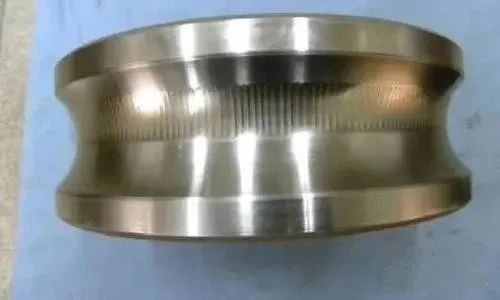
② The axial clearance between the outer bearing cover of the motor and the outer circle of the rolling bearing is too small.
Solution: Large and medium-sized motors generally use ball bearin gs at the non shaft extension end. The shaft extension end adopts roller bearings, so that when the rotor expands due to heat, it can stretch freely. Due to the use of ball bearings at both ends of small motors, there should be an appropriate gap between the outer bearing cover and the outer ring of the bearing. Otherwise, the bearing may generate heat due to excessive axial thermal elongation. When this phenomenon occurs, the front or rear bearing cover should be removed slightly, or a thin paper pad should be added between the bearing cover and the end cover to create sufficient clearance between one end of the outer bearing cover and the outer ring of the bearing.
③ The end caps or bearing caps on both sides of the motor are not properly installed.
Solution: If the end caps or bearing caps on both sides of the motor are not installed parallel or the stopper is not tightly fitted, it will cause the ball to deviate from the track and rotate, resulting in heat generation. It is necessary to re install the end caps or bearing caps on both sides and fix them evenly with bolts.
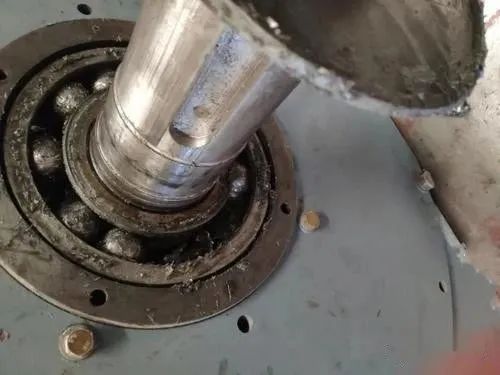
④ Improper selection or improper use and maintenance of lubricating grease, poor quality or deteriorated lubricating grease, or mixed with dust and impurities can all cause bearing heating.
Solution: Adding too much or too little grease can also cause the bearing to heat up, because when there is too much grease, there will be a lot of friction between the rotating part of the bearing and the grease, while when there is too little grease added, dry friction and heating may occur. Therefore, it is necessary to adjust the amount of lubricating grease to about 1/2-2/3 of the volume of the bearing chamber space. Improper or deteriorated lubricating grease should be cleaned thoroughly and replaced with suitable and clean lubricating grease.
Of course, there are many reasons that can lead to bearing quality problems, but as long as we hit the nail on the head and grasp the root cause of the problem, we can fully ensure the safety and stability of motor bearing quality.
Related News