
【In depth analysis】Differences between cycloidal pinwheel reducer and planetary cycloidal pinwheel reducer, no longer confused after reading!
Release Time:
2024-11-05
In the industrial field of our country, cycloidal pinwheel reducer and planetary cycloidal pinwheel reducer are two very common types of reducers. They have a wide range of applications, such as printing, packaging, ceramics, rubber and plastic industries. However, many people often wonder what the differences are and which one is more suitable for their needs when making a choice. Today, let me deeply analyze their differences for you and help you make wise choices.
In the industrial field of our country, cycloidal pinwheel reducer and planetary cycloidal pinwheel reducer are two very common types of reducers. They have a wide range of applications, such as printing, packaging, ceramics, rubber and plastic industries. However, many people often wonder what the differences are and which one is more suitable for their needs when making a choice. Today, let me deeply analyze their differences for you and help you make wise choices.
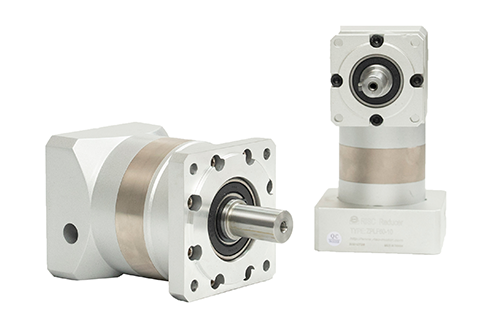
Firstly, we need to understand their definitions and working principles. The cycloidal pinwheel reducer utilizes the motion of the cycloidal pinwheel to transmit power, and has the advantages of simple structure, low noise, and stable operation. The planetary cycloidal pinwheel reducer, on the other hand, is centered around the planetary carrier and achieves power transmission through the interaction between the planetary carrier and the cycloidal pinwheel. It has the characteristics of high transmission ratio, high efficiency, and strong load-bearing capacity.
Next, let's take a look at their main differences:
1. Structural difference: The structure of the cycloidal pinwheel reducer is relatively simple, mainly composed of cycloidal gear, pinwheel, and housing. The planetary cycloidal pinwheel reducer is composed of planetary carrier, cycloidal gear, pinwheel, and housing, and its structure is more complex.
2. Transmission method: The cycloidal pinwheel reducer adopts direct transmission of cycloidal pinwheel, which has high transmission efficiency. The planetary cycloidal pinwheel reducer adopts a combination transmission of planetary carrier and cycloidal pinwheel, with a larger transmission ratio, suitable for application scenarios that require a larger transmission ratio.
3. Load bearing capacity: The planetary cycloidal pinwheel reducer has a relatively strong load bearing capacity due to the use of a planetary carrier. The load-bearing capacity of the cycloidal pinwheel reducer is relatively weak, making it suitable for situations with small loads.
4. Noise and operational stability: The cycloidal pinwheel reducer has lower noise and more stable operation. The noise of the planetary cycloidal pinwheel reducer is slightly higher, but within an acceptable range.
So, how to choose a suitable cycloidal pinwheel reducer or planetary cycloidal pinwheel reducer for oneself?
2. Transmission ratio requirement: If a larger transmission ratio is needed, a planetary cycloidal pinwheel reducer should be selected; If the transmission ratio requirement is small, the cycloidal pinwheel reducer is more suitable.
3. Operating environment: Consider the operating environment of the gearbox, such as temperature, humidity, pollution, and other factors, and choose the appropriate type of gearbox.
Related News